What are the UK's 1.6 million GLP-1 users really eating?
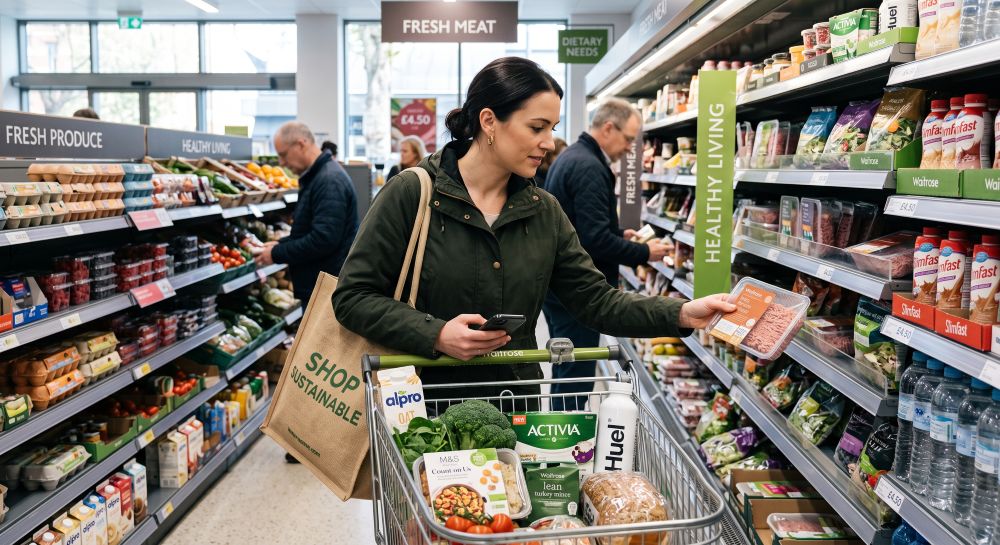
Co-op sells a "Good Fuel" mini meal at 250g for £3.50 and says it is built for the one in 30 UK shoppers it estimates are on a GLP-1 weight-loss medication. M&S has a 20-strong "Nutrient Dense" range priced £5.75 to £7. Morrisons launched a "Small & Balanced" line with Applied Nutrition before Christmas 2025, now sold under a dedicated "GLP-1 Friendly" category at £3.75 for a 280g meal, and Iceland has put 38 meals through MyProtein and Slimming World branding. All of that has launched in the past eight months, and most of it follows the same brief: shrink the pack, add protein, add fibre.
New data published this week suggests that brief is already out of date.
How many people this actually affects
A UCL-led study published in BMC Medicine on 8 January 2026, based on a representative survey of 5,260 adults across England, Wales and Scotland, found that 1.6 million UK adults had used a weight-loss drug in the previous year. Another 3.3 million said they wanted to. That is 4.9 million adults, nearly one in ten, either using or wanting to use GLP-1 medication. Usage was twice as common among women (4%) as men (1.7%), and highest in the 45-55 age group (4.2%). Trade press separately estimates roughly 1.5 million current users, a different figure from a different methodology, but close enough to the UCL number to confirm the same thing: this is a large, fast-growing group.
That is the direct market. It is not the addressable one. New consumer research from IFF, PwC's Strategy&, BCG and The Harris Poll UK, published 19 August 2026, found that around 70% of GLP-1 users say the medication changed what other people in their household eat too. Model a reformulation business case against 1.6 million users alone and you have undercounted the household spillover by roughly half.
Why "just add protein and fibre" is already out of date
The same 19 August study challenges assumptions the category has been formulating against for the past year. A few matter directly for a food team. Sensory experience, not the nutrition panel, is what actually drives repurchase: 73% of users reported real changes in taste preference, and 70% said they had lost "some of the joy of eating." A product that hits its protein target but tastes worse than what it replaced will not get bought again just because the macros look right.
Portion size is not a simple shrink either. The research argues for redesigning formats around how a reduced appetite actually structures a day, rather than making an existing product smaller and calling it done. The effect is not uniform across categories or time: bakery may see demand rebound once someone comes off treatment, while functional products tend to peak only while someone is actively on it. One reformulation strategy applied across a whole portfolio will get some categories right and others wrong.
The UK-specific finding is the one worth sitting with longest. British GLP-1 users are not shifting toward snacking the way US data suggested they might. They are keeping breakfast and dinner as anchored meals and, compared with people managing their weight without medication, are eating more grain-based and baked products, not fewer. If a reformulation plan assumes GLP-1 demand means smaller, more frequent snacks, the UK consumer research does not back that assumption.
The retailer moves are already ahead of most manufacturers
Co-op's "one in 30" framing and Iceland's MyProtein and Slimming World-branded range, both detailed in a just-food feature on the retailer launches, show retailers moving faster than the supply base that has to fill their shelves. A February 2026 Food Navigator review of the same launches also found that 44% of GLP-1 users say they now have a new go-to retailer, specifically for products they see as nutritionally dense.
That is retailers doing customer segmentation in public, which gives a formulation team a genuinely useful signal: the demand is confirmed, named, and priced. Asda's "Power Pots" at £2.50 for 250g show roughly where the price ceiling sits for this format. A manufacturer still deciding whether GLP-1 is worth a formulation brief is behind five major UK retailers who have already decided it is.
The formulation brief this actually creates
Put together, the data points toward small, high-protein formats where taste and texture carry as much weight as the nutrition panel, functional beverages positioned around digestive tolerance rather than macros alone, the same fibre-and-tolerance trade-offs Nibblr has covered in drinks formulation, and modular components that let a shopper build a smaller meal rather than buy a pre-shrunk one.
None of that is a single SKU. It sits closer to the same sugar and texture problem Nibblr has covered before, what to replace when you cut sucrose and what actually works when a clean label claim is on the line, because a smaller portion with less forgiving sugar and fat still has to taste like the product it replaced.
What this means for a food team
If you are sizing a GLP-1 opportunity, use the household spillover multiplier, not just the 1.6 million user figure, or the business case will be undersold internally. If you are briefing a reformulation, treat taste and mouthfeel as the primary success metric, not a secondary one behind the protein and fibre numbers, because the data now says taste is what determines whether the product gets bought again.
Audit the portfolio by category before committing one reformulation approach across all of it: a bakery line and a functional drink are on different demand curves for the same customer. And where nutrient density already matters to the NPM score, the same recalculation that helps a product clear HFSS thresholds is now also a commercial argument, not just a compliance one.
The category timeline point is worth building into any NPD roadmap now rather than after launch. A product designed to peak during active treatment needs a different shelf-life and promotional plan to one expected to hold demand through a treatment pause.
Frequently asked questions
How many people in the UK use GLP-1 weight-loss medication?
A UCL study published in BMC Medicine on 8 January 2026 found 1.6 million UK adults had used a weight-loss drug in the previous year, with a further 3.3 million saying they wanted to, based on a representative survey of 5,260 adults. Trade press separately estimates around 1.5 million current users, a close but not identical figure from a different methodology.
Does GLP-1 use in the UK affect people who are not taking the medication?
Yes. Research published 19 August 2026 by IFF, PwC's Strategy&, BCG and The Harris Poll UK found that around 70% of GLP-1 users said the medication changed what other people in their household eat.
Are UK GLP-1 users snacking more, the way US data suggests?
No. The same research shows UK GLP-1 users keeping traditional breakfast and dinner meal structures, with higher consumption of grain-based and baked products rather than a shift toward snacking.
Is adding protein and fibre enough to reformulate for GLP-1 demand?
The data suggests not on its own. 73% of surveyed users reported changed taste preferences and 70% said they had lost some enjoyment of eating, which means sensory quality, not just the nutrition panel, is what determines repeat purchase.
Which UK retailers have launched GLP-1-focused ranges?
Co-op (Good Fuel), M&S (Nutrient Dense), Morrisons (Small & Balanced, with Applied Nutrition), Asda (Power Pots) and Iceland (via MyProtein and Slimming World) have all launched dedicated ranges since late 2025.
4.9 million UK adults have changed how they eat, and five major retailers have already built ranges around it while most manufacturers are still deciding whether to. If you are weighing a GLP-1 reformulation brief against a live product portfolio rather than a single SKU, that is the kind of cross-category call Nibblr's platform is built to support with real data. Try it here.