Fibre in drinks: why it's hard to formulate and harder to claim
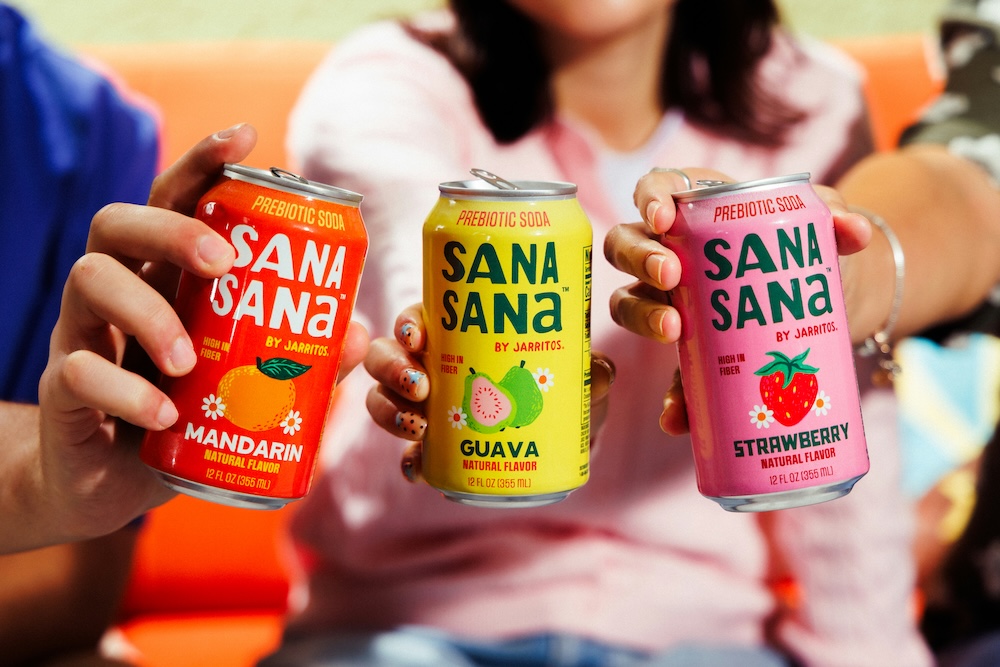
When Poppi launched in UK Tesco stores in March 2026, Carlsberg Britvic made one deliberate change to the marketing. In the US, Poppi is sold as a gut health soda with prebiotic credentials. In the UK, the press release described it as "high in fibre, low in sugar and calories, and made with real fruit juice." No prebiotic claim. No gut health language.
The product is identical. The rules are not. Poppi contains 3g of fibre per can, well below the 12g per day specified for the authorised prebiotic claim on the GB Nutrition and Health Claims register. PepsiCo, which acquired Poppi for $1.95bn in 2025, was not willing to risk a labelling challenge in its UK launch market. So the claim was dropped.
That story tells you almost everything you need to know about formulating fibre beverages for the UK market right now. The consumer demand is real. The market momentum is significant. The UK functional beverage sector is worth £2.2 billion as of 2026, and a growing share of it is built on gut health positioning. "Fibermaxxing" went mainstream on TikTok in late 2025 and the food industry has followed fast. But the gap between a meaningful fibre inclusion and a claimable fibre inclusion is wider than most briefs acknowledge, and the formulation to close that gap is harder than it looks.
Why fibre behaves differently in beverages than in solid food
In solid food — a bar, a cracker, a bread — fibre sits in a matrix. There's protein, fat, starch, moisture all interacting. The fibre has structural company.
In a beverage, it's mostly alone in water. That changes everything.
Solubility is the first issue. Not all fibres dissolve in water, and of those that do, not all dissolve cleanly. Insoluble fibres (wheat bran, cellulose) create haze and sediment in liquid systems. They can work in opaque beverages with adequate suspension, but they're a serious challenge in clear or lightly coloured drinks.
Viscosity is the second. Many soluble fibres, once dissolved in water, increase viscosity as concentration rises. Beta-glucan from oats or barley is the clearest example: strong evidence for cholesterol reduction and gut health, but it thickens significantly at the concentrations needed to meet a "source of fibre" claim. A beta-glucan beverage at 3g per serving is noticeably more viscous than water. Fine in a thick smoothie format. Not viable in a clean, refreshing RTD.
Stability over shelf life is the third, and arguably the most underestimated. A fibre that looks stable in a freshly manufactured product may continue to hydrate during storage. A product that passes factory QC at week one can fail at month two, when viscosity has crept up enough to affect pourability or phase separation becomes visible on shelf. Research published in Translational Food Sciences confirms this: fibres with high water-binding capacity can produce formulations that are impossible to process or that become unstable later in shelf life as continued hydration drives viscosity beyond acceptable limits.
pH sensitivity adds a fourth layer. Heat processing (pasteurisation, UHT) at low pH can partially hydrolyse some fibres, reducing fibre content and potentially undermining the nutritional claim you've built the product around.
The fibres actually used in beverages, and why
Different fibre types have different beverage suitability profiles. The practical shortlist:
Inulin and fructooligosaccharides (FOS). The most widely used fibres in functional beverages. Soluble, relatively low-viscosity at moderate inclusion levels, and good stability in mildly acidic systems. Inulin is a prebiotic: it ferments in the large intestine and feeds Bifidobacteria. The trade-off is tolerance. At high inclusion (above around 8–10g per serving), inulin can cause bloating and digestive discomfort in sensitive individuals. For beverages targeting a broad consumer, inclusion levels in the 3–5g range per serving are typical. XOXO, the UK prebiotic soda, uses a blend of three natural fibres to reach 6g per can while managing digestive tolerance. Hip Pop sits at around 5–6g per serving.
Chicory root fibre (soluble chicory root fibre, SCRF). Functionally similar to inulin, since chicory root is the main commercial source of both. Good solubility, good prebiotic activity. Danone's Activia Fibre Berries and Cereals uses oligofructose (typically derived from chicory root) as part of its fibre system. Well-supported by EFSA health claim status, but the authorised dose for that claim is 12g per day, which is why even products with 5–6g per serving are unable to carry the prebiotic health claim directly.
Pea fibre. Has a stronger flavour profile that needs careful management in clear beverages. Works better in plant-based milks, smoothies, and opaque RTDs where it sits alongside complementary flavours.
Gum acacia (acacia fibre). One of the most beverage-friendly fibres available. Very high solubility, minimal viscosity impact even at higher inclusion levels, neutral flavour, good clarity in solution, stable across a wide pH range. Fibregum Clear (CNI) is specifically designed for clear acidic beverages. The cost is higher than many alternatives, and the inclusion level needed to meet a "source of fibre" claim in a low-calorie beverage requires close attention to the per-100ml vs per-serving calculation.
Soluble corn fibre / digestion-resistant maltodextrin. Products like Fibersol-2 (ADM) are digestion-resistant maltodextrins with high solubility, minimal viscosity, clarity in solution, and good acid and heat stability. They work in low-pH clear beverages where most other fibres fail and are increasingly used in prebiotic sodas. Coca-Cola's Simply Pop uses prebiotic fibre at 6g per can. The fibre content on AOAC analysis can vary slightly by analytical method: worth confirming with your supplier which method was used.
Beta-glucan. Strong health claim evidence (EFSA-authorised claims for maintenance of normal blood cholesterol levels at 3g per day), but viscosity is a serious formulation challenge. Suitable for thicker formats (smoothies, oat-based drinks) where viscosity is an expected part of the experience. Not practical in clear beverages.
What the label says and what it needs to back it up
The Poppi case is instructive but it's not unusual. Many fibre beverage projects run into claim problems late in development, when reformulating to hit a higher inclusion level either compromises the sensory profile or blows the cost model.
In Great Britain, fibre claims are governed by retained UK law derived from Regulation (EC) No 1924/2006, maintained in the GB Nutrition and Health Claims (NHC) register (last updated February 2025). The thresholds are:
"Source of fibre": at least 3g per 100g, or at least 1.5g per 100 kcal. "High fibre": at least 6g per 100g, or at least 3g per 100 kcal.
For beverages, where serving sizes are large relative to calorie content, the per-100kcal route is often the more accessible. A 330ml can at 20 kcal (typical for a lightly sweetened functional water) has a per-100kcal threshold of 1.5g. That means the can needs 0.3g of fibre total for a "source of" claim: easily achievable. But if the NPD brief says "at least 5g fibre per can," you need 1.5g per 100ml, which is a substantially harder formulation challenge.
Two practical points that trip teams up:
The claim threshold is based on the product as consumed, not the ingredient as purchased. Some fibre ingredients have a declared fibre content based on the AOAC method, but the analytically tested fibre in your finished product, after heat processing, pH exposure, and dilution, can be lower. Test the finished product, not just the raw ingredient specification.
"Gut health" is not a permitted nutrition claim. It's a health claim, and the authorised claims for specific fibres are specific about conditions and doses. Chicory root fibre (inulin and FOS) carries an authorised claim for increased stool frequency at 12g per day. Beta-glucan carries one for maintenance of normal blood cholesterol at 3g per day. General gut health language on pack without an authorised claim basis is a labelling risk, and the UK advertising regulator has enforced on this. Poppi's US settlement (the brand agreed to pay $8.9m to consumers who purchased its drinks between 2020 and 2025, following claims that its marketing overstated gut health benefits) is the clearest recent warning of what that risk looks like at scale.
There's a second reason to get the fibre number right, beyond the claim. Under NPM 2018 the fibre score doubles to a maximum of 10 points, so a genuinely high-fibre drink can pull its HFSS score down while it earns a label claim
The "fibre-infused water" challenge
Most new UK launches in this space are concentrating on clear sparkling formats. A clear, shelf-stable, lightly flavoured sparkling water with meaningful fibre and a clean label is a genuinely hard brief. Each element pushes against the others:
Clarity rules out most insoluble fibres and limits which soluble fibres you can use. Acacia fibre and soluble corn fibre are the realistic candidates.
Carbonation creates processing constraints. How you introduce fibre into a carbonated system affects stability and gas retention.
Ambient shelf stability means the fibre must remain in solution without continuing to hydrate over 9–18 months. This rules out fibres with aggressive water-binding properties.
Clean label means avoiding "corn syrup" language if using certain soluble corn fibres, which creates ingredient naming complexity. Acacia fibre and chicory root fibre tend to read better on a clean-label brief.
Cost is the constraint that closes the conversation. Simon Gray, founder of It's Giving (a UK high-fibre soda launched at £1 per can), is clear that "fibre is an expensive ingredient, relative to standard soft drinks." Getting to meaningful fibre inclusion in a clear, clean-label format at a commercially viable price point requires getting the maths right early, not at commercialisation.
How UK brands are doing it: what the working examples look like
The fibre brief is hard. Some UK brands have worked it out, and the choices they've made are instructive.
Funki Drinks / Fibre UP. Probably the clearest UK SME case study in beverage fibre. Funki Drinks developed what they describe as the UK's first carbonated soft drink fortified with a curated fibre blend, working with Dr Fred Warren at the Quadram Institute and backed by Innovate UK's Better Food for All programme. The development process involved advanced in vitro colonic fermentation modelling to identify an optimal fibre blend for digestive tolerance before the product went anywhere near a production run. The result was a beverage with proven gut microbiome impact and a fibre blend that passed stability and tolerance testing. It's the kind of R&D investment that most small brands don't budget for, but Funki's approach (test the biology first, then engineer the format around it) is the right order of operations.
XOXO Soda. A UK prebiotic soda now listed in Ocado, using a blend of three natural fibres to reach 6g per can. XOXO spent two years and over 50 development iterations before landing on the formulation. The blend approach (rather than a single fibre at high dose) is deliberate: it manages digestive tolerance while also, in their words, feeding different good bacteria. The fibre system is described as resistant to degradation, which addresses the shelf-life hydration risk directly.
Perkier. A UK snack bar brand that uses chicory root fibre at 5g per bar. Worth noting here because it illustrates an approach many beverage teams miss: Perkier uses chicory root fibre as a functional binder, replacing glucose syrups in the bar structure. The fibre isn't just delivering a nutrition claim, it's doing structural work in the formulation. That kind of dual-function thinking, where the fibre earns its cost by doing two jobs at once, is what makes fibre reformulation commercially viable rather than just a nutrition label exercise.
Schar (gluten-free bakery). Not a beverage, but the reformulation approach is directly relevant. Schar relaunched its Panini roll with a 70% sugar reduction and a 12% increase in fibre content, achieved by increasing the proportion of whole rice and maize flour. Gluten-free matrices are typically low in fibre because the structural role of gluten is replaced by starches with minimal fibre contribution. Schar's route was to choose whole-grain versions of those same starches, keeping the structural function while lifting the fibre content. It's a clean-label approach that also improved the NPM score. Kellanova took a comparable route with Special K High Fibre Crunchy Golden Clusters, achieving 13g of fibre per 100g while simultaneously reducing sugar, salt, and saturated fat.
The pattern across these examples is consistent. The brands that get it right design around the fibre from the start, whether that means choosing whole-grain carriers, using fibre as a functional binder, or investing in stability and tolerance testing before committing to a format. The brands that struggle tend to add fibre to a finished brief, then work backwards to make it work.
What to front-load when briefing a fibre beverage
Specify the fibre before you specify the format. If the brief is genuinely "clear, sparkling, ambient-stable," start with acacia or soluble corn fibre and build from there. The fibre choice should drive the format decisions, not the other way around.
Model the claim before you prototype. Know whether your target inclusion will meet the "source of fibre" threshold in the finished product under your specific format and process. Don't assume the raw ingredient spec will hold through processing.
Test stability at month 3 and month 6, not just at release. Viscosity creep and clarity changes are a shelf-life phenomenon, not a factory phenomenon.
Decide on your claims architecture before you write the brief. If gut health is part of the brand positioning, clarify early whether you're resting on general wellness framing (achievable) or building toward an authorised health claim (requires a specific fibre at a specific dose). The Poppi situation is a case study in what happens when that decision gets made at the marketing stage rather than the formulation stage.
The FDF's Action on Fibre initiative has helped participating brands add 118 million portions of fibre to UK diets in the past year alone. The consumer moment is real. The brands that get the formulation and the claims right from day one are the ones that get to keep the shelf space.
Frequently asked questions
Why is fibre hard to add to beverages?
Most fibres either fail to dissolve clearly in water, significantly increase viscosity at the concentrations needed for a label claim, cause stability problems over shelf life, or are degraded by heat and acid during processing. Formulating a clear, stable, good-tasting fibre beverage requires careful fibre selection matched to the specific beverage format and process.
What fibres work best in clear functional drinks?
Gum acacia (acacia fibre) and soluble corn fibre (digestion-resistant maltodextrin, such as Fibersol-2) are the most beverage-compatible options for clear, low-calorie drinks. Both have high solubility, minimal viscosity impact at typical inclusion levels, and reasonable stability across pH and heat. Chicory root fibre and inulin work well in lightly coloured or opaque formats but are more challenging in clear systems at higher inclusion levels.
What does "source of fibre" mean on a UK food label?
Under retained UK law derived from Regulation (EC) No 1924/2006, a food or drink may carry the claim "source of fibre" if it contains at least 3g of fibre per 100g, or at least 1.5g per 100 kcal. For a "high fibre" claim, the thresholds are 6g per 100g or 3g per 100 kcal. These thresholds apply to the product as consumed and as analytically tested, not to the raw ingredient specification.
Can a beverage carry a "gut health" claim?
Not as a free-standing claim. "Gut health" or "supports digestive health" is a health claim in the UK, not a nutrition claim, and requires an authorised health claim basis with specific conditions of use. EFSA-authorised claims exist for specific fibres: chicory root fibre at 12g per day for increased stool frequency, and beta-glucan at 3g per day for maintenance of normal blood cholesterol. General gut health language without an authorised claim basis is a labelling risk, as Poppi's US marketing settlement illustrates.
Why do fibre beverages sometimes separate or thicken on shelf?
Fibres with strong water-binding properties can continue to hydrate after manufacturing, increasing viscosity and potentially causing phase separation over time. Beverages that appear stable in factory quality checks may fail at month three or six of ambient storage. Testing finished products across their intended shelf life, not just at release, is essential.
How does the UK daily fibre recommendation translate to a beverage brief?
The Scientific Advisory Committee on Nutrition recommends 30g of dietary fibre per day for UK adults. Most UK adults currently consume 18–20g, and only 3–4% meet the 30g target according to the National Diet and Nutrition Survey (years 2019–2023). A functional beverage contributing 3–6g per serving represents a meaningful contribution to closing that gap and is achievable with the right fibre type and formulation approach.
Does EU Regulation 1169/2011 exclude fibre from the carbohydrate definition?
Under Regulation (EU) No 1169/2011, fibre is not included in the total carbohydrate figure on nutrition labels. Carbohydrates are defined as metabolisable carbohydrates only, which excludes dietary fibre. This means you report carbohydrates and fibre as separate rows on the nutrition declaration
Nibblr scores your product against NPM 2004/05 and 2018 as you adjust the fibre system, so you can see the claim and the score move together. Get started free.